
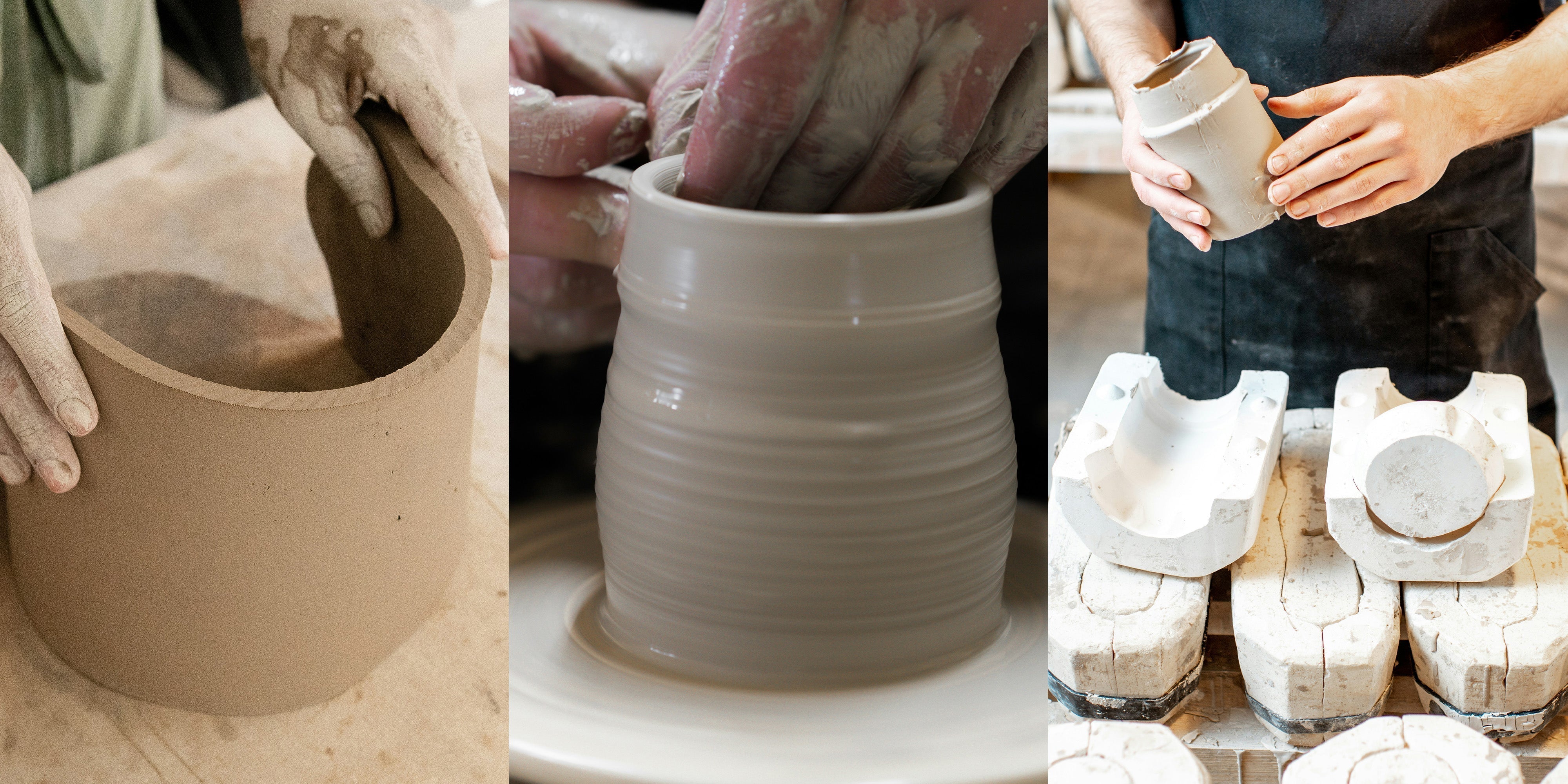
The world of pottery encompasses diverse techniques, each with unique characteristics, challenges, and creative possibilities. Whether you're drawn to the meditative rhythm of the potter's wheel, the hands-on construction of handbuilding, or the precision of slip casting, understanding these three fundamental pottery techniques will help you choose the right approach for your creative vision. This comprehensive guide explores handbuilding, wheel throwing, and slip casting in depth, providing insights into their processes, advantages, and ideal applications.
Understanding the Foundation of Pottery Techniques
Before diving into specific techniques, it's helpful to understand what distinguishes one pottery method from another. Each technique represents a different relationship between the maker and the clay, requiring distinct skills, equipment, and mindsets. The choice of technique affects not only the making process but also the aesthetic qualities, production capacity, and types of forms you can create.
Some potters specialize in a single technique throughout their careers, while others blend multiple approaches depending on the project. Many successful ceramic artists become proficient in all three techniques, selecting the most appropriate method for each piece they envision. Understanding the strengths and limitations of each approach empowers you to make informed decisions about your pottery practice.
Handbuilding: The Most Ancient and Versatile Technique
Handbuilding is the oldest pottery technique, predating the invention of the potter's wheel by thousands of years. This method involves shaping clay using only your hands and simple tools, without mechanical assistance. Despite its ancient origins, handbuilding remains incredibly relevant today, offering unparalleled creative freedom and accessibility.
Core Handbuilding Methods
Handbuilding actually encompasses several distinct techniques, each suitable for different types of forms and aesthetic approaches.
Pinch Pot Construction is the most fundamental handbuilding method. You start with a ball of clay and use your fingers to pinch and thin the walls while rotating the form in your hand. This technique produces organic, asymmetrical pieces with visible marks from the maker's fingers. While often taught to beginners due to its simplicity, pinch pot construction can create sophisticated forms in the hands of experienced artists. Japanese tea bowls, valued for their rustic beauty and connection to the maker, are often created using refined pinching techniques.
Coil Building involves rolling clay into long, rope-like coils and stacking them to build up walls. The coils can be left visible for textured, decorative effects or smoothed together to create seamless surfaces. This technique is ideal for large vessels, sculptural forms, and pieces with organic, irregular shapes. Native American pueblo pottery and ancient Greek storage jars were traditionally built using coiling methods, demonstrating the technique's structural capabilities.
Slab Construction uses flat sheets of clay, rolled out like pastry dough, which are then cut and assembled into forms. Slabs can be soft and pliable for creating curved forms or leather-hard and rigid for geometric, architectural pieces. This technique excels at creating boxes, angular vessels, tiles, and architectural ceramics. Contemporary ceramic artists often use slab building for sculptural work, taking advantage of the flat planes and sharp angles this method naturally produces.
Advantages of Handbuilding
Handbuilding's primary advantage is its minimal equipment requirements. You need only clay, a few simple tools (a rolling pin or slab roller, cutting wire, a knife, and smoothing tools), and a work surface. This makes handbuilding the most accessible pottery technique for beginners and those without access to studio facilities.
The technique offers tremendous creative freedom. Unlike wheel throwing, which naturally produces round, symmetrical forms, handbuilding can create virtually any shape imaginable. Sculptural work, figurative ceramics, architectural pieces, and irregular organic forms are all well-suited to handbuilding approaches.
Handbuilding also allows for a more contemplative pace. You can set down your work and return to it later without the urgency required in wheel throwing, where clay must maintain specific moisture levels during the throwing process. This makes handbuilding ideal for artists who work in sessions or want to carefully consider each decision during construction.
Challenges and Considerations
The primary challenge in handbuilding is maintaining even wall thickness and achieving structural integrity, especially in larger pieces. Because you're building up forms gradually, clay must be kept at consistent moisture levels, and joints must be properly scored and slipped to prevent cracking.
Handbuilt pieces also require more time to complete than wheel-thrown pieces of similar size. The process of rolling coils, cutting slabs, and assembling components is inherently slower than throwing a cylinder on the wheel. However, many artists find this slower pace meditative and valuable for their creative process.
Surface finishing in handbuilding requires attention to detail. While wheel-thrown pieces naturally develop smooth, finished surfaces during throwing, handbuilt pieces may need extensive smoothing, scraping, and refining to achieve professional results. However, many contemporary artists celebrate the marks of making, leaving tool marks and fingerprints visible as part of the piece's character.
Best Applications for Handbuilding
Handbuilding excels for sculptural ceramics, where form takes precedence over function. Figurative work, abstract sculpture, and conceptual pieces benefit from the freedom handbuilding provides. Architectural ceramics like tiles, panels, and large-scale installations are typically handbuilt due to their flat or angular forms.
Large-scale vessels and planters are often more practical to handbuild than throw, as handbuilding allows you to create forms larger than most potter's wheels can accommodate. Boxes, rectangular vessels, and pieces with flat sides are naturally suited to slab construction, while organic, textured pieces work beautifully with coil building techniques.
Wheel Throwing: The Potter's Signature Craft
Wheel throwing is what most people envision when they think of pottery—a spinning wheel, wet clay, and a potter's hands shaping a vessel that rises seemingly by magic. This technique uses centrifugal force to shape clay into symmetrical forms, requiring specialized equipment and considerable skill to master.
The Throwing Process
Wheel throwing begins with centering, the fundamental skill that every wheel potter must master. A lump of clay is placed on the spinning wheel head, and the potter uses hand pressure to force the clay into a centered, symmetrical cone. This centered clay becomes the foundation for all thrown forms.
Once centered, the potter opens the clay by pressing down into the center to create the bottom of the vessel. The walls are then pulled upward through a combination of pressure from inside and outside the form while the wheel spins. This pulling process thins and raises the walls, creating the vessel's basic shape.
Shaping involves refining the form's profile, creating curves, bellies, and necks through careful hand placement and pressure. The potter can compress the rim, create decorative grooves, or alter the form while it's still spinning. Finally, the piece is removed from the wheel using a cutting wire and set aside to dry to leather-hard stage, when it will be trimmed to refine the foot and exterior surface.
Advantages of Wheel Throwing
The primary advantage of wheel throwing is speed and efficiency. Once you've developed throwing skills, you can produce multiple similar pieces quickly, making it ideal for functional pottery production. A skilled production potter can throw dozens of mugs, bowls, or plates in a single session.
Wheel throwing naturally creates symmetrical, balanced forms with smooth, refined surfaces. The spinning motion and consistent hand pressure produce even wall thickness and flowing curves difficult to achieve through handbuilding. This makes wheel throwing ideal for functional ware like dinnerware, cups, and bowls, where symmetry and balance enhance both aesthetics and usability.
The technique also creates a particular aesthetic quality prized in ceramics. Throwing rings—the subtle spiral lines left by fingers pulling up the clay—add visual interest and reveal the making process. The dynamic, energetic quality of thrown work differs distinctly from the more constructed feeling of handbuilt pieces.
Challenges and Learning Curve
Wheel throwing has a notoriously steep learning curve. Centering alone can take weeks or months to master, and beginners often experience frustration before achieving consistent results. The technique requires physical strength, hand-eye coordination, and the ability to read the clay's moisture and response.
Equipment requirements present another barrier. Potter's wheels range from several hundred dollars for entry-level models to several thousand for professional wheels. The wheel also requires dedicated space, and thrown pieces need to be created in single sessions, as clay must maintain specific moisture levels throughout the throwing process.
Body mechanics and posture are crucial in wheel throwing, and poor technique can lead to physical strain. Learning proper positioning, breathing, and muscle engagement takes time and often benefits from in-person instruction. Many beginners develop bad habits that must be unlearned later, making quality initial instruction particularly valuable.
Best Applications for Wheel Throwing
Wheel throwing excels at functional pottery production. Dinnerware sets, cups, bowls, plates (thrown on a bat or pressed from thrown blanks), pitchers, and vases are all natural applications for thrown work. The technique's efficiency makes it ideal for production potters selling functional ware.
Symmetrical, round forms that would be difficult or time-consuming to handbuild are perfectly suited to wheel throwing. Bottles with narrow necks, enclosed forms, and vessels with thin, even walls demonstrate the technique's strengths. Lidded containers benefit from wheel throwing's precision, as thrown lids can be custom-fitted to thrown bodies during the leather-hard stage.
The technique also lends itself to sets and series, where multiple identical or similar pieces are needed. A thrown mug can be replicated dozens of times with remarkable consistency, something handbuilding cannot easily achieve.
Slip Casting: Precision Through Mold Making
Slip casting represents a fundamentally different approach to pottery, using liquid clay (slip) poured into plaster molds. This technique, developed in the 18th century and refined during the Industrial Revolution, bridges handcraft and industrial production, offering precision, repeatability, and the ability to create complex forms impossible to achieve through throwing or handbuilding.
The Slip Casting Process
Slip casting begins with slip preparation. Clay is mixed with water and deflocculants (chemicals that allow the clay particles to remain suspended) to create a liquid with a consistency similar to heavy cream. The slip must be carefully mixed to remove air bubbles and achieve the proper viscosity.
Plaster molds are created by making a model of the desired form and then casting plaster around it. Many forms require multi-part molds that come apart to release the cast piece. The mold's interior surface determines the cast piece's exterior surface, so careful mold making is crucial for quality results.
During casting, slip is poured into the dry plaster mold, which immediately begins absorbing water from the slip. A layer of clay builds up on the mold's interior surface, gradually thickening. For hollow pieces, excess slip is poured out once the desired wall thickness is achieved. Solid pieces are filled completely and allowed to set.
As the plaster continues absorbing moisture, the cast piece shrinks slightly and releases from the mold. The mold is opened, the piece is removed, and seams are cleaned up. The piece then dries and is fired like any other ceramic object.
Advantages of Slip Casting
Slip casting's primary advantage is reproducibility. Once you have a mold, you can cast identical pieces repeatedly with minimal variation. This makes slip casting ideal for production work, replacement pieces for damaged items in sets, or creating multiples for gallery exhibitions or sales.
The technique enables complex forms impossible to achieve through other methods. Undercuts, enclosed spaces, intricate surface detail, and organic shapes that would be structurally impossible to throw or difficult to handbuild become achievable. Cast pieces can also be extremely thin-walled and lightweight, as the casting process naturally creates even wall thickness.
Slip casting requires less physical strength than wheel throwing and allows for consistent production without the skill variation inherent in hand techniques. A single person can cast dozens of pieces in a day, and the technique can be taught more quickly than wheel throwing, as it relies more on technical process than physical skill.
Challenges and Considerations
The primary barrier to slip casting is the investment required in mold making. Creating quality plaster molds requires skill, materials, and time. Professional molds can be expensive to purchase, and making your own requires learning additional technical skills beyond pottery itself.
Slip preparation and maintenance require attention to technical details. Slip must be carefully mixed, screened, and tested for proper viscosity and casting properties. As slip is used and reclaimed, its properties change, requiring adjustments to maintain consistency.
Cast pieces often require significant clean-up work. Seam lines must be smoothed, excess clay trimmed away, and surfaces refined. While casting itself is faster than throwing or handbuilding, the finishing time can be substantial, especially for complex molds.
The aesthetic of slip-cast work differs from thrown or handbuilt pieces, sometimes appearing more manufactured or less "handmade." While many contemporary artists celebrate this quality and use casting for its unique characteristics, others find it lacks the immediate connection between maker and material present in other techniques.
Best Applications for Slip Casting
Slip casting excels for production of identical multiples, making it ideal for dinnerware manufacturers, commercial pottery production, and artists creating edition work. When you need fifty identical pieces, slip casting is the most efficient approach.
Complex sculptural forms with undercuts, hollow interiors, or intricate surface detail are naturally suited to casting. Many contemporary ceramic sculptors use slip casting to achieve forms impossible through other techniques, sometimes combining cast components with thrown or handbuilt elements.
Thin, lightweight pieces like porcelain teacups, delicate vessels, and fine dinnerware benefit from casting's ability to create even, thin walls. Historical ceramics like fine china and decorative porcelain figurines have traditionally been slip cast for these qualities.
The technique is also valuable for creating consistent components that will be assembled into larger pieces. Cast handles, spouts, feet, and decorative elements can be attached to thrown or handbuilt bodies, combining the strengths of multiple techniques.
Combining Techniques for Greater Possibilities
Many accomplished potters don't limit themselves to a single technique but instead combine methods to achieve their creative vision. A vessel might have a thrown body with handbuilt handles and a cast spout. Slab-built boxes might incorporate thrown cylindrical elements. Cast decorative components might embellish handbuilt sculptural work.
This hybrid approach expands creative possibilities and allows you to leverage each technique's strengths. A production potter might throw basic forms for efficiency but handbuild custom lids or attachments for visual interest. A sculptor might cast multiples of certain components while handbuilding unique elements for each piece.
Understanding all three techniques, even if you specialize in one, makes you a more versatile and capable ceramic artist. You'll recognize opportunities to solve construction challenges by borrowing methods from different approaches, and you'll better understand the possibilities and limitations of ceramic form.
Choosing the Right Technique for Your Goals
Your choice of technique should align with your creative goals, available resources, and personal working style. Consider what types of objects you want to create, whether you prioritize efficiency or meditative process, and what equipment and space you can access.
If you're drawn to functional pottery and enjoy the rhythm of production work, wheel throwing offers efficiency and the satisfying challenge of developing physical skill. If you prefer sculptural work, organic forms, or working at a contemplative pace, handbuilding provides maximum creative freedom with minimal equipment.
If you're interested in creating multiples, appreciate technical precision, or want to achieve complex forms, slip casting offers unique possibilities despite its higher barrier to entry. Many potters begin with one technique and gradually expand their skill set, discovering new creative directions as they master additional methods.
Getting Started with Each Technique
Each pottery technique requires different resources and learning approaches. Handbuilding is the most accessible for home practice, requiring only clay, basic tools, and a work surface. Many potters successfully handbuild at home, firing work through community studios or kiln rental services.
Wheel throwing typically requires class instruction and studio access when starting out. The hands-on guidance and immediate feedback from an instructor accelerates learning dramatically. Once you've developed basic skills, you might invest in a home wheel, but initial learning benefits greatly from structured instruction.
Slip casting requires the most technical knowledge and equipment investment. Many potters learn casting in workshop settings or through mentorship with experienced casters. The mold-making process alone requires specialized knowledge, and many beginners start by purchasing commercial molds while learning the fundamentals of slip preparation and casting process.
The Future of Your Pottery Practice
As you develop your skills in any of these techniques, you'll discover personal preferences, strengths, and creative directions. Some potters find their calling in the meditative repetition of production throwing, while others thrive on the problem-solving challenges of complex handbuilding or the technical precision of slip casting.
The beauty of ceramics is that there's no single "right" approach. Each technique has supported successful, creative pottery practices for generations of makers. Your journey might focus deeply on mastering one approach, or you might become a generalist who moves fluidly between all three methods.
What matters most is choosing techniques that support your creative vision and bring you joy in the making process. Whether you're centering clay on a spinning wheel, coiling up a sculptural form, or pouring slip into a carefully crafted mold, you're participating in ancient traditions while creating something entirely new and uniquely yours.
The three fundamental pottery techniques—handbuilding, throwing, and slip casting—offer different paths into the rich world of ceramics. Understanding their distinct characteristics, advantages, and applications empowers you to choose wisely, work effectively, and ultimately create pottery that expresses your artistic vision. Start with the technique that calls to you most strongly, and let your practice evolve naturally from there.

Share:
Why is My Pottery Cracking? A Complete Troubleshooting Guide
Common Pottery Defects and How to Prevent Them: A Comprehensive Guide